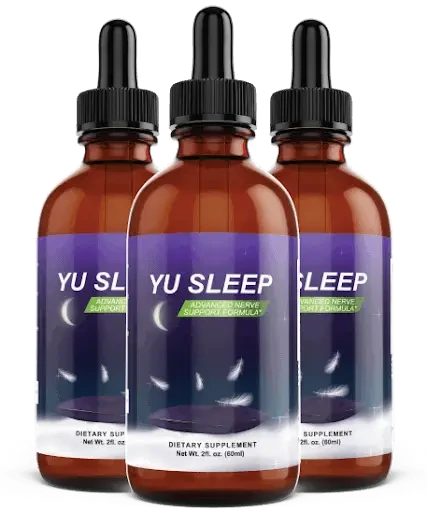
First ask what the claim actually promises
“Contains a studied ingredient” is narrower than “this product improves sleep.” Write the claim in plain language before opening the citation. Is it about falling asleep, staying asleep, next-day functioning or something else? Those are different outcomes.
NCCIH warns that commercial supplements can differ from products tested in studies. Its Know the Science resources help readers assess scientific information and distinguish anecdotes from evidence. Supplement research context
Check whether the study matches the claim
| Question | What to inspect |
|---|---|
| What was tested? | The finished product, one ingredient, a different extract or a different preparation? |
| How was it used? | The amount, route and duration, rather than only the ingredient name. |
| Who took part? | Participants with characteristics relevant to the claim. |
| What was compared? | A control condition and the design of the comparison. |
| What changed? | The measured outcome, size of the difference and uncertainty. |
| What limits the conclusion? | Study size, follow-up, missing data, funding and other limitations. |
This checklist is a reading aid, not a numerical quality score. A small study is not automatically worthless, and a large study does not make an irrelevant preparation relevant. If the full information is unavailable, record that limitation.
An example of an evidence gap
Imagine a fictional study testing ingredient A on its own, with a specified quantity, for four weeks. A bottle that contains A plus several other ingredients is not automatically the same intervention. If the amount of A is undisclosed, even the dose comparison is unresolved.
The correct conclusion might be “there is research on A, but this study does not establish the blend’s performance.” That statement is more useful than either treating the paper as a product endorsement or dismissing the paper entirely.
Where do testimonials belong?
A testimonial can tell you what someone says happened. It usually cannot show what would have happened without the product, identify every relevant change or establish a typical result. The same limitation applies to positive and negative accounts.
For service questions, records of an order, support response and refund outcome may still be useful. Keep those questions separate from clinical effectiveness. Our Yu Sleep complaint guide follows that distinction.
Use the method when reading this website too
The ingredient evidence table identifies the scope of the research we examined. Some entries are limited to bibliographic records; we do not assign efficacy conclusions to those records. The sources policy explains the categories used.
If a claim cannot be traced to an appropriate source, leave it unresolved. There is no need to turn incomplete information into either a confident recommendation or a sweeping accusation. Return to the main Yu Sleep review for the product-specific synthesis.
Sources & references
Checked September 18, 2026. Citations describe the scope of the material reviewed, not an endorsement of the product.