What is the short answer?
The finished Yu Sleep formula is not established as effective by the sources reviewed for this site. Some of its listed ingredients have been studied, but ingredient-level evidence does not establish the effect of the complete blend.
We did not locate an identifiable randomized trial of the finished Yu Sleep formula in the sources used for this review. That is an evidence limitation, not proof that the product can never help an individual.
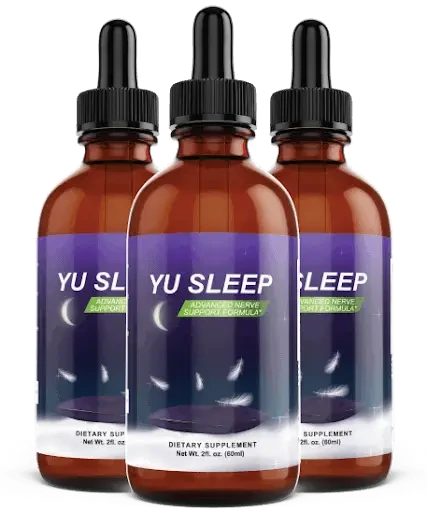
YU SLEEP · CURRENT OFFER
Thinking about trying Yu Sleep?
Check the current offer and available package options before you order.
View Current Offer Affiliate link · offer details may changeWhy does product-specific evidence matter?
A controlled product study would test the actual formula, dose, population and outcome. It would help answer whether the complete intervention performs better than an appropriate control.
By contrast, a study of tart cherry juice does not establish that a particular amount of tart cherry extract in Yu Sleep produces the same effect. Magnesium research can involve different populations, preparations and doses. The same issue applies to the other ingredients.
Our ingredient review separates seller-listed ingredients from the evidence that can actually be applied to them.
What does the ingredient research tell us?
The seller lists melatonin, red tart cherry extract, 5-HTP, magnesium glycinate, apigenin, lemon balm, L-theanine, GABA and B vitamins. The amount available for independent comparison is not equally clear across those components.
What ingredient studies can tell you
- Whether an ingredient has been studied.
- Which population and dose were studied.
- Which sleep outcome was measured.
- What limitations researchers reported.
What they cannot prove by themselves
- That Yu Sleep contains the same preparation.
- That the amount matches the study.
- That ingredients work the same way in a blend.
- That the finished product improves sleep.
What about the melatonin in Yu Sleep?
The seller's current page lists 0.9 mg of melatonin per serving. NCCIH notes that melatonin may help with jet lag and some shift-work situations, while evidence for chronic insomnia is less convincing. A 2022 systematic review and meta-analysis found no significant improvement across several major sleep outcomes in adults with non-comorbid chronic insomnia.
That research still cannot be treated as a Yu Sleep clinical trial. For the direct comparison with standalone melatonin, see Yu Sleep vs melatonin.
What should you make of testimonials and timelines?
Testimonials describe individual experiences. They cannot establish an expected success rate, identify what caused a change in sleep or show how the product compares with placebo.
The same applies to sales-page timelines. There is no verified Yu Sleep-specific timeline that this site can use as a prediction. Sleep can change because of schedules, stress, medication, illness and other factors at the same time a supplement is started.
What evidence would make the answer clearer?
The strongest missing piece is a well-described controlled study of the finished Yu Sleep formula. Useful reporting would include the exact formula and dose, participant characteristics, comparator, predefined sleep outcomes, duration, adverse events and enough methodological detail to assess the results.
Until then, keep three statements separate: the seller says, an ingredient has been studied, and the finished product has been tested. They are not interchangeable.
Sources & references
Checked September 30, 2026. Citations describe the scope of the material reviewed, not an endorsement of the product.